Frogs and Toads of North America
Squirrel Treefrog
Hyla squirella (7/8"–1 5/8")
 Photo © Lang Elliott
Voice: The advertisement call is a nasal, buzzing quack that is briskly repeated around two times per second: rrraak-rrraak-rrraak-rrraak-rrraak. The Squirrel Treefrog gets its name from another call, a squirrellike rain call that it gives from shrubs and trees away from breeding areas. The rain call is weaker and more raspy than the advertisement call and is reminiscent of the scolding notes of gray squirrels.
The highly variable Squirrel Treefrog is a common rain frog of the South, and often erupts with raspy, squirrel-like calls from bushes and trees even before a thunderstorm begins. Squirrel Treefrogs often frequent suburban gardens and brushy tangles, where they take shelter in recesses of buildings; in clothesline poles; under boards and pots; and in other moist, concealed areas.
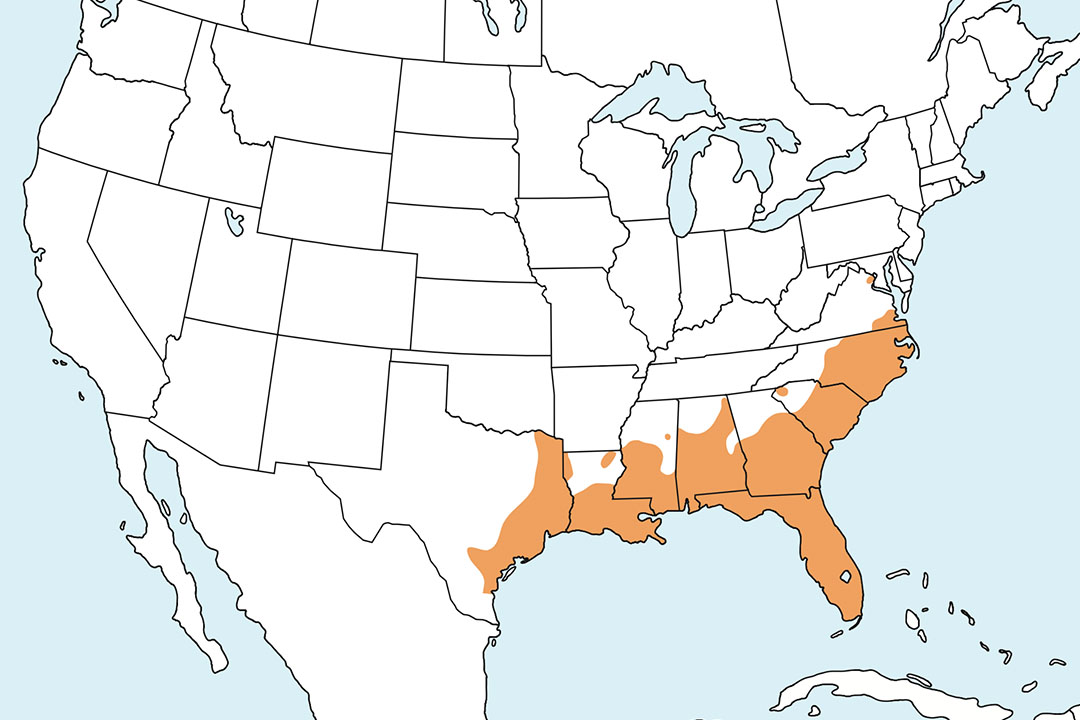
Range and Habitat: Squirrel Treefrogs occur from Virginia to Texas in coastal plain regions and in peninsular Florida. They occupy a wide variety of habitats, including deciduous woods, pine-flat woods, and sandhills.
Appearance: The dorsal color ranges from brown to rich green, and spots may be present or absent. Individuals often change in color and pattern over time. There is usually a vague light stripe along each side of the body, but this is never as bold and distinct as the stripes of its larger relative the Green Treefrog. Brown individuals are easily confused with the similar-sized Pine Woods Treefrog, but this latter species has bright white or yellow spots on the backs of its thighs that are lacking in the Squirrel Treefrog.

Photo © Lang Elliott. This individual is swatting mosquitoes!

Photo © Lang Elliott.
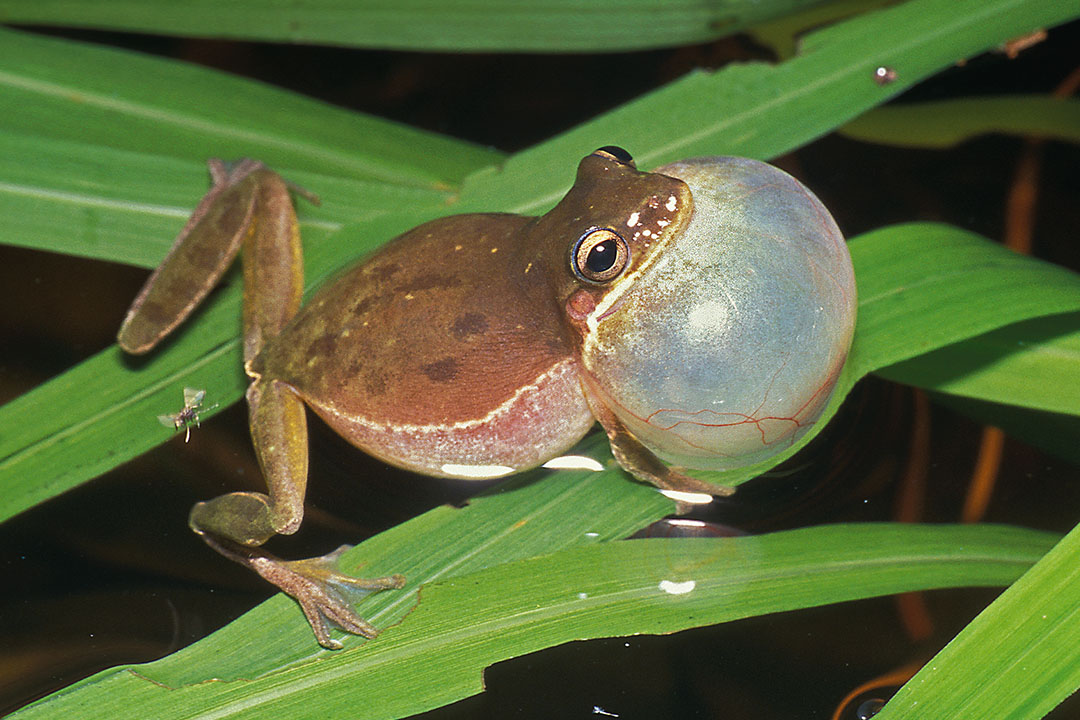
Photo © Dick Bartlett.
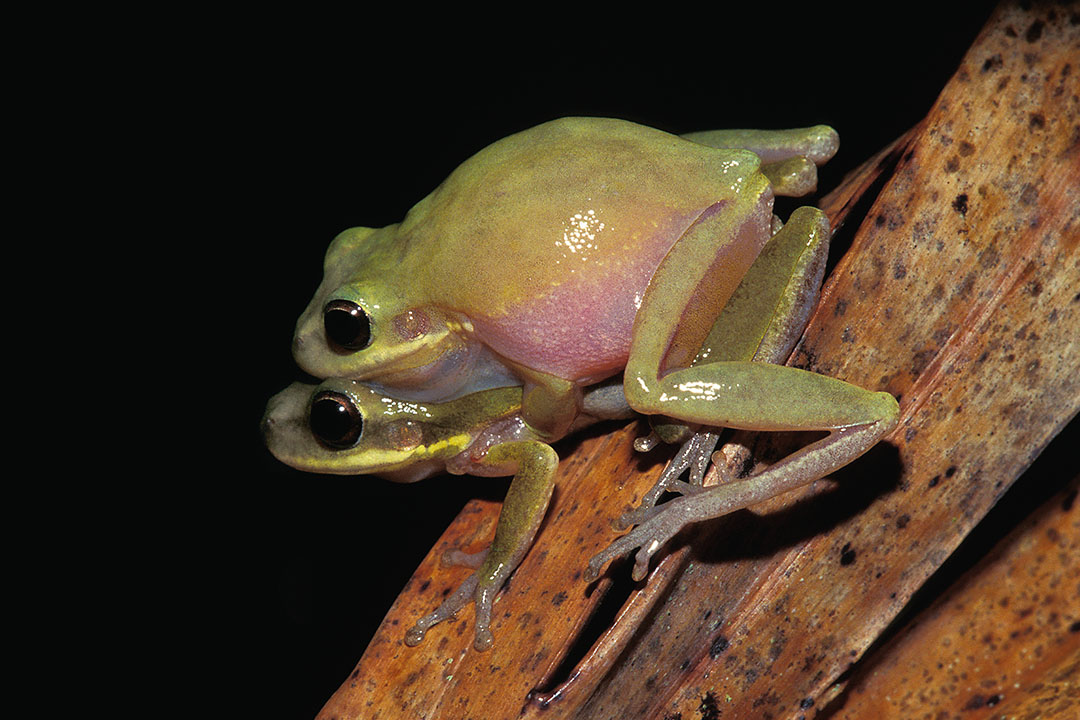
Photo © Lang Elliott.
Behavior: Squirrel Treefrogs are mainly explosive summer breeders that form large choruses lasting only a night or two. The males congregate and call excitedly from temporary ponds, pools, and roadside ditches. (In many cases, however, these bodies of water dry out before the tadpoles have a chance to transform.) Even when there has been little rain, isolated males may be heard calling in the shallow parts of semipermanent and permanent ponds. Satellite behavior (LINK GOES HERE p. 24) is common, and a large male may have several satellites positioned near him, all attempting to intercept females that are attracted to his loud calls.
Conservation Status (summary from animaldiversity.org): Squirrel treefrogs are relatively abundant throughout their geographic range. They are considered a species of “Least Concern” on the IUCN Red List. They have no special status on the United States Endangered Species List or in the CITES appendices, and are not listed on any other federal or state conservation lists.

Photo © Dick Bartlett.
Find More Frogs and Toads: