A Guide to
The Frogs & Toads of North AmericaCrickets and Bullfrogs and more. A spacious "binaural" soundscape; please listen using headphones. © Lang Elliott.
Welcome!
This online guide to the Frogs and Toads of North America features over 105 species found in the United States and Canada. Packed with natural history information, sound recordings, videos, range maps, and tips for finding, observing, and identifying frogs and toads, this guide also includes sections on conservation as well as evolution and speciation. The coverage of sound is notable, and features a growing collection of immersive soundscape recordings of mixed species choruses from across the continent.
Start exploring now ... we trust you will enjoy the show!
Looking for a particular frog or toad? Find species here:
Thumbnail Guide (by Region)
Thumbnail Guide (by Family)
Full Species List
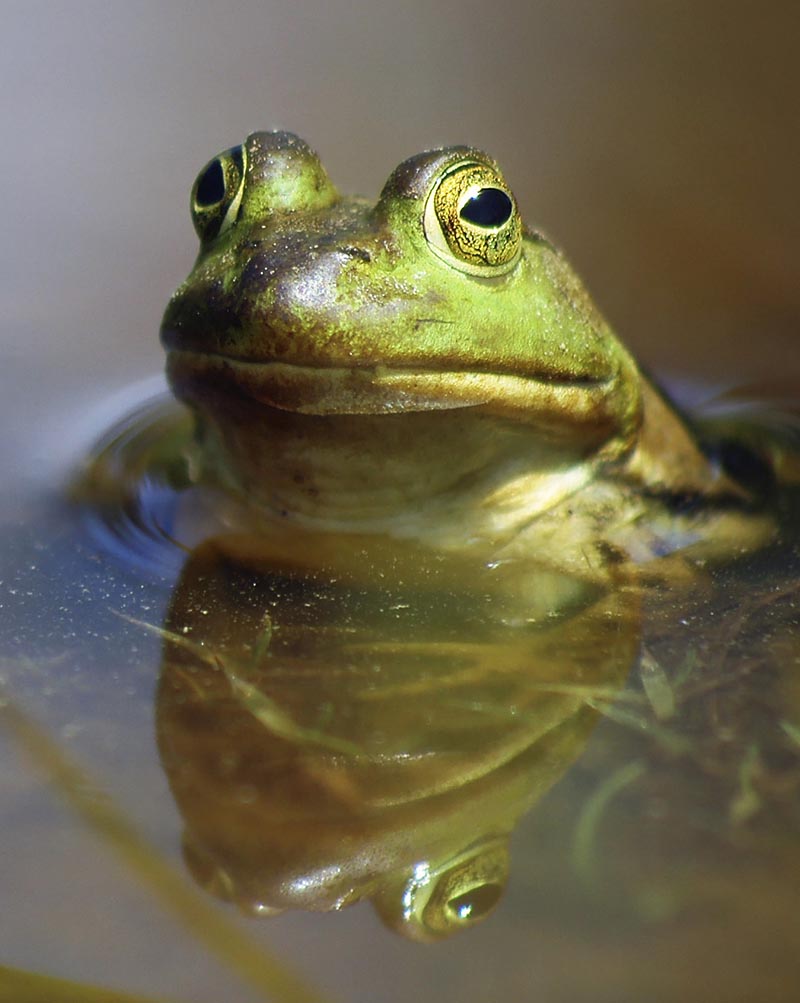
Photo © Lang Elliott
Start exploring now ... we trust you will enjoy the show!

Squirrel Treefrog © Lang Elliott.
Frogs and toads produce an impressive variety of sounds, all manner of croaks, peeps, trills, snores, barks, and chuckles. Choruses often pulsate with complex rhythms; neighboring males call back and forth in tight alternation and groups erupt after long periods of silence. While scientists interpret these calls in terms of their function — mate attraction, aggression, distress, and the like — the poet listens with a different ear, judging the emotional impacts of the sounds and the feelings evoked by the choruses.
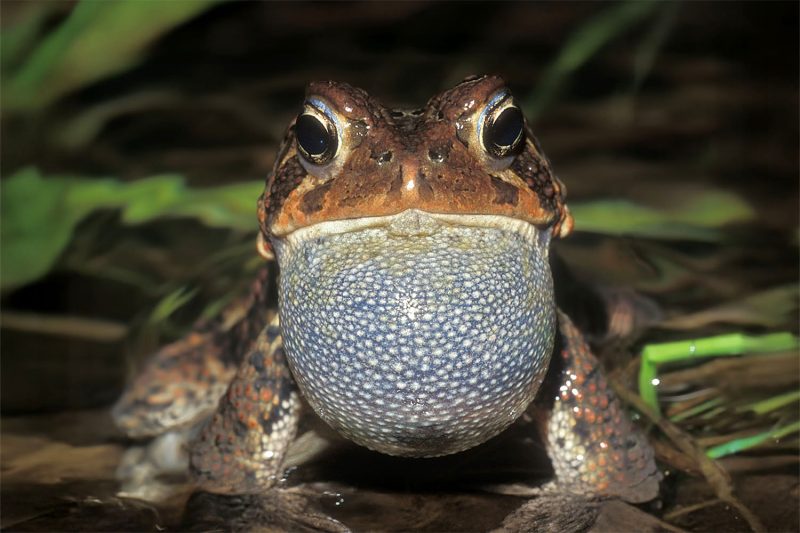
American Toad © Lang Elliott.
In this online guide, we celebrate the lives and calls of more than one hundred species of frogs and toads found in North America. They are a unique and diverse group of organisms that many of us take for granted. But some species are in trouble, and others are likely to follow. Frogs and toads are indicators of environmental health. They are affected not only by habitat destruction and global climate change but also by chemical pollution and disease. A number of western species are undergoing severe declines and could be headed toward extinction, in part because of chytrid fungus, a disease that is having enormous impacts on amphibian populations throughout the world. Now is clearly the time for an increased awareness of our frogs and toads, coupled with closer monitoring of their populations and intensive scientific study of the causes of their declines.
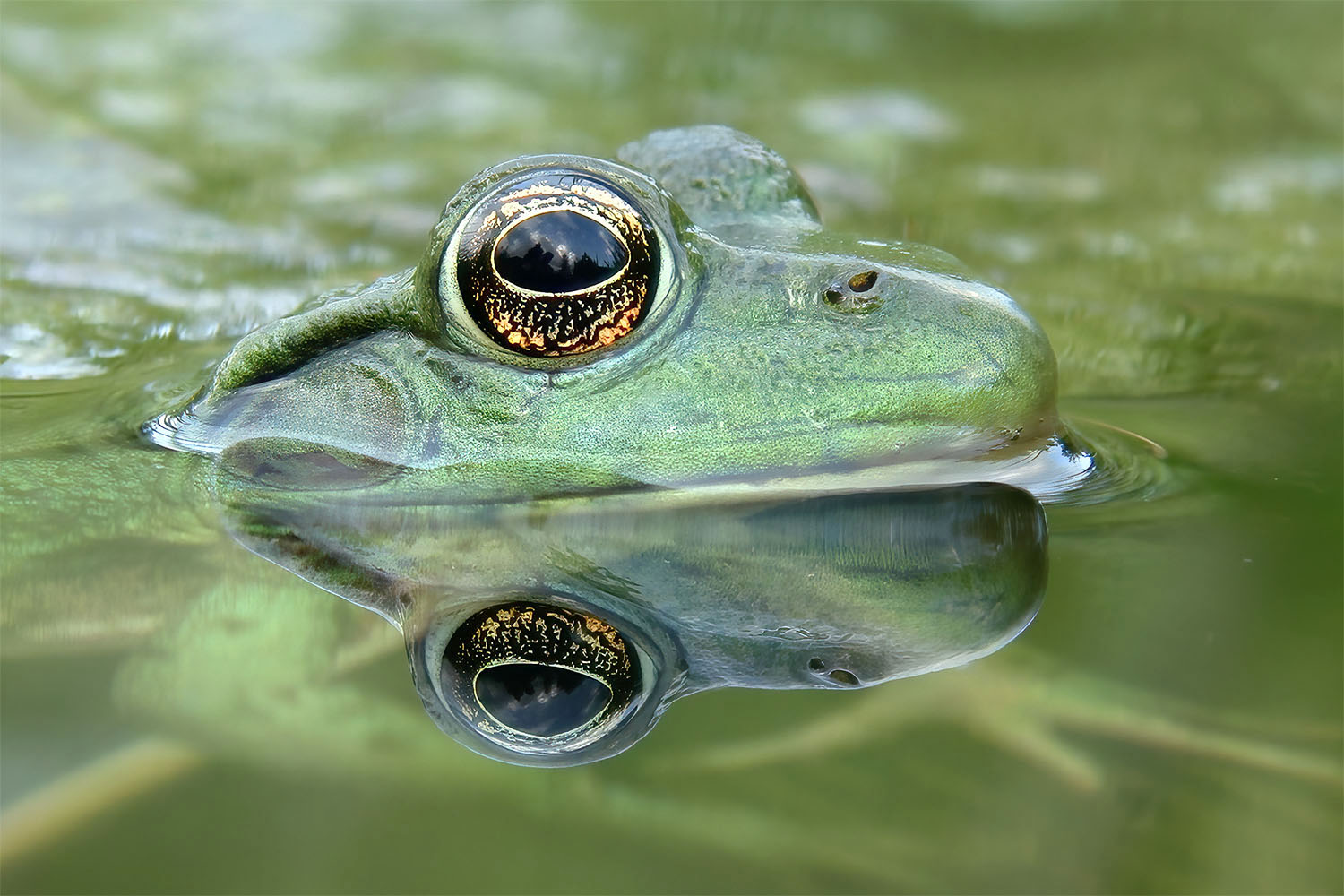
Greenfrog © Lang Elliott.
Our frogs and toads are a natural treasure worth saving. They excite our imaginations; their sounds stir the music within our souls. They impress us at every turn, not only during the breeding season, when their calls enliven the night air, but also during our daytime walks along the shores of ponds, lakes, and woodland pools, when we share the experience of Basho and other poets of centuries past:
Old dark sleepy pool
Quick unexpected frog
Goes plop! Watersplash
— Basho (seventeenth-century haiku poet)