Frogs and Toads of North America
Classification — Family Groups
Frogs and toads are members of the order Anura, which is Greek for “tailless” (an, “without”; oura, “tail”). They are often referred to as anurans and there are nearly 5,300 species worldwide. In North America (north of Mexico), there are currently 97 native species and 4 introduced species of frogs and toads, for a total of 101 species. Scientific research into the taxonomy and classification of anurans continues, and the number of species is expected to grow, as new species are discovered with the help of modern genetic, biochemical, morphological, and behavioral analyses.
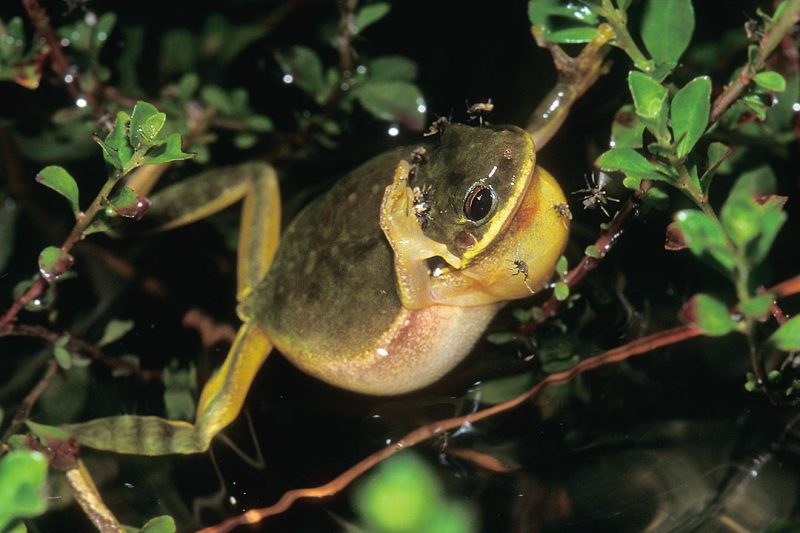
The frogs and toads of North America fall into nine family groups, which are described briefly below. More information about these can be found in the family introductions accessible by clicking the "More Info" links. The photographs below show a representative member of each family group.
Hylidae — Treefrogs & Allies
Ranidae — True Frogs

Ranidae Description
Referred to as the true frogs, twenty-eight species live in North America. This family includes many of the familiar pond and lake frogs, including the Bullfrog, Green Frog, and various species of leopard frogs. More Info. Photo © XXXXX XXXXX.
Bufonidae — True Toads
Bufonidae Description
Known as the true toads, twenty-two species are found in North America. This family includes the common hop toads, recognized by their chunky bodies, large wartlike glands on their skin, and terrestrial habits. More Info. Photo © XXXXX XXXXX.
Scaphiopodidae — Spadefoots
Scaphiopodidae Description
This small family is composed of seven species of North American spadefoots. They are a group of chunky, toadlike burrowing anurans with spadelike projections on their hind feet that aid in digging. More Info. Photo © XXXXX XXXXX.
Hylidae — Treefrogs & Allies:
Hylidae Description
This is a large and diverse family, thirty species of which are found in North America (north of Mexico). The group includes the treefrogs, chorus frogs, cricket frogs, and several tropical species that just barely range into the United States. More Info. Photo © XXXXX XXXXX.
Ranidae — True Frogs:
Referred to as the true frogs, twenty-eight species live in North America. This family includes many of the familiar pond and lake frogs, including the Bullfrog, Green Frog, and various species of leopard frogs. More Info. Photo © XXXXX XXXXX.
Bufonidae — True Toads:
Known as the true toads, twenty-two species are found in North America. This family includes the common hop toads, recognized by their chunky bodies, large wartlike glands on their skin, and terrestrial habits. More Info. Photo © XXXXX XXXXX.
Hylidae — Treefrogs & Allies:
This is a large and diverse family, thirty species of which are found in North America (north of Mexico). The group includes the treefrogs, chorus frogs, cricket frogs, and several tropical species that just barely range into the United States. More Info. Photo © XXXXX XXXXX.
Ranidae — True Frogs:
Referred to as the true frogs, twenty-eight species live in North America. This family includes many of the familiar pond and lake frogs, including the Bullfrog, Green Frog, and various species of leopard frogs. More Info. Photo © XXXXX XXXXX.
Bufonidae — True Toads:
Known as the true toads, twenty-two species are found in North America. This family includes the common hop toads, recognized by their chunky bodies, large wartlike glands on their skin, and terrestrial habits. More Info. Photo © XXXXX XXXXX.
Scaphiopodidae — Spadefoots:
This small family is composed of seven species of North American spadefoots. They are a group of chunky, toadlike burrowing anurans with spadelike projections on their hind feet that aid in digging. More Info. Photo © XXXXX XXXXX.
Microhylidae — Narrowmouth Toads:
This large family includes three species found in North America. Known as narrowmouth toads, they are small, burrowing amphibians with pointed snouts and narrow mouths.
More Info. Photo © XXXXX XXXXX.
Leptodactylidae — Tropical Frogs:
This is a large family of New World tropical frogs; only seven species range into the United States, mostly in Texas, Arizona, and Florida. Nearly all members of this group lay their eggs on the land; the larval stage is passed inside the egg. More Info. Photo © XXXXX XXXXX.
Ascaphidae — Tailed Frogs:
Known as the tailed frogs because males have taillike copulatory organs, this family includes only two species, both of which are restricted to fast-flowing mountain streams in parts of the Northwest. More Info. Photo © XXXXX XXXXX.
Rhinophrynidae — Burrowing Toads:
This family consists of a single species, the Mexican Burrowing Toad, which is found in the United States only in extreme southern Texas along the lower Rio Grande River. More Info. Photo © XXXXX XXXXX.
Pipidae — Tongueless Frogs:
Known as the tongueless frogs, this large and diverse family is represented in the United States by a single introduced species, the African Clawed Frog, which has become established in southern California and other locations. More Info. Photo © XXXXX XXXXX.